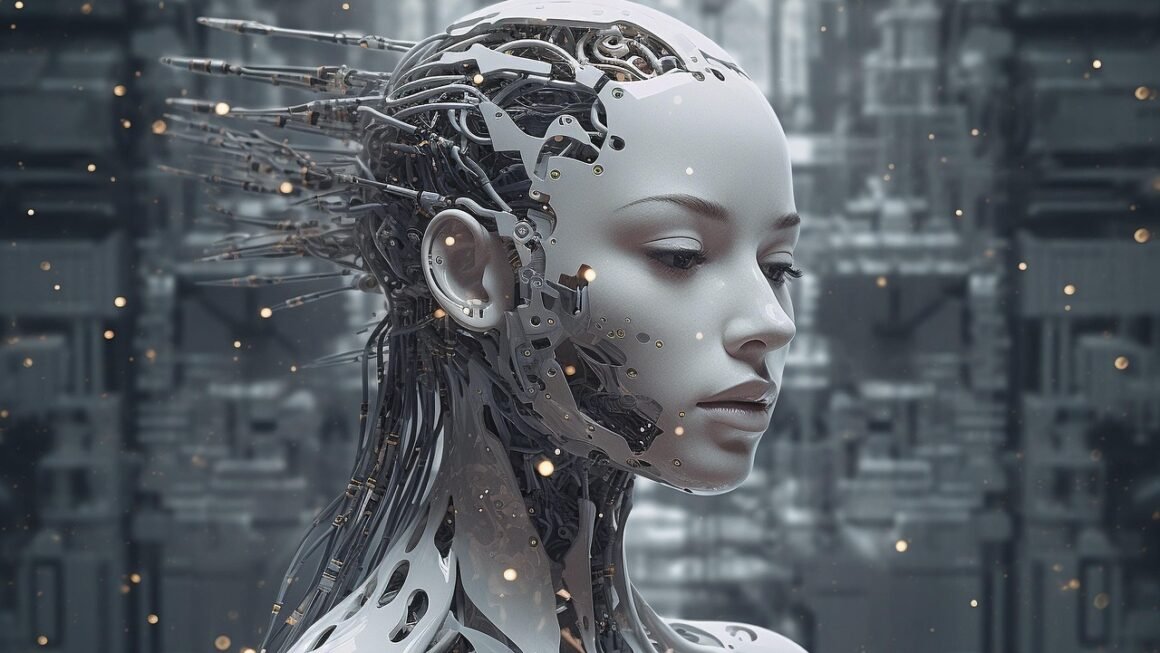
Artificial intelligence (AI) has moved from the realm of science fiction to become an integral part of our everyday lives. From recommending your next binge-worthy show to powering self-driving cars, AI is rapidly transforming industries and reshaping how we interact with the world. But what exactly is artificial intelligence, and how is it being used to solve complex problems? This blog post delves into the core concepts, applications, and future implications of this groundbreaking technology.
What is Artificial Intelligence?
Defining Artificial Intelligence
At its core, artificial intelligence refers to the ability of a computer or machine to mimic human intelligence. This includes capabilities like:
- Learning: Acquiring and integrating new knowledge or skills.
- Reasoning: Drawing conclusions and making decisions based on available information.
- Problem-solving: Finding solutions to complex issues.
- Perception: Interpreting and understanding sensory input (e.g., images, sounds, text).
- Natural Language Processing (NLP): Understanding and generating human language.
It’s not about robots taking over the world (at least, not yet!), but rather about creating intelligent systems that can assist and augment human capabilities. AI is often categorized into two main types:
- Narrow or Weak AI: Designed to perform a specific task exceptionally well (e.g., image recognition, spam filtering). This is the type of AI we primarily encounter today.
- General or Strong AI: Possesses human-level intelligence and can perform any intellectual task that a human being can. This is a theoretical concept that researchers are actively working towards.
Different Approaches to AI
Several approaches underpin the development of AI systems. Two prominent methods are:
- Machine Learning (ML): Algorithms that allow computers to learn from data without explicit programming.
Supervised Learning: The algorithm is trained on labeled data, where the desired output is known. Example: training an email filter using emails labeled as “spam” or “not spam.”
Unsupervised Learning: The algorithm identifies patterns and structures in unlabeled data. Example: clustering customers based on their purchasing behavior.
Reinforcement Learning: The algorithm learns through trial and error, receiving rewards or penalties for its actions. Example: training a robot to navigate a complex environment.
- Rule-Based Systems: Rely on pre-defined rules and logic to make decisions. These systems are often used for tasks that require precise execution, such as medical diagnosis.
- Actionable Takeaway: Understand the fundamental concepts of AI, including its definition and different approaches, such as machine learning and rule-based systems. This will help you grasp the capabilities and limitations of AI technologies.
Applications of Artificial Intelligence
AI in Healthcare
AI is revolutionizing healthcare in numerous ways:
- Diagnosis and Treatment: AI algorithms can analyze medical images (X-rays, MRIs) to detect diseases like cancer with greater accuracy and speed than human radiologists. Companies like IBM Watson Health are developing AI-powered tools to assist doctors in making diagnoses and recommending personalized treatment plans.
- Drug Discovery: AI can accelerate the process of drug discovery by analyzing vast amounts of data to identify potential drug candidates and predict their effectiveness. This significantly reduces the time and cost associated with traditional drug development.
- Personalized Medicine: AI can analyze a patient’s genetic information, lifestyle, and medical history to create personalized treatment plans tailored to their specific needs.
- Robotic Surgery: Robots equipped with AI algorithms can perform complex surgical procedures with greater precision and minimal invasiveness.
AI in Business and Finance
AI is transforming various aspects of business and finance:
- Customer Service: AI-powered chatbots can provide instant customer support, answer frequently asked questions, and resolve simple issues.
- Fraud Detection: AI algorithms can analyze financial transactions in real-time to detect fraudulent activity and prevent losses.
- Risk Management: AI can assess and manage financial risks by analyzing market trends, economic indicators, and other relevant data.
- Marketing and Sales: AI can personalize marketing messages, optimize advertising campaigns, and predict customer behavior to improve sales and conversions. For example, companies use AI to personalize product recommendations on e-commerce platforms.
- Process Automation: AI and Robotic Process Automation (RPA) are automating repetitive tasks, improving efficiency, and reducing operational costs.
AI in Transportation
AI is driving innovation in the transportation sector:
- Self-Driving Cars: AI algorithms enable vehicles to perceive their surroundings, navigate roads, and make driving decisions without human intervention. Companies like Tesla, Waymo, and Uber are heavily investing in self-driving car technology.
- Traffic Management: AI can optimize traffic flow by analyzing real-time data and adjusting traffic signals to reduce congestion.
- Logistics and Supply Chain: AI can optimize delivery routes, predict demand, and improve inventory management in the logistics and supply chain industries.
- Actionable Takeaway: Explore how AI is being applied in various industries, from healthcare to finance and transportation. Identifying these applications can provide insights into potential career paths and business opportunities.
The Benefits and Challenges of AI
Advantages of AI
- Increased Efficiency and Productivity: Automating tasks with AI leads to higher output and reduced operational costs.
- Improved Accuracy and Precision: AI algorithms can perform tasks with greater accuracy and consistency than humans.
- Enhanced Decision-Making: AI can analyze vast amounts of data to provide insights that inform better decisions.
- 24/7 Availability: AI-powered systems can operate continuously without fatigue or downtime.
- Personalized Experiences: AI can tailor products, services, and content to individual needs and preferences.
Potential Challenges and Concerns
- Job Displacement: Automation through AI can lead to job losses in certain industries.
- Ethical Considerations: AI raises ethical questions about bias, fairness, and accountability. AI systems can perpetuate and amplify existing biases in the data they are trained on.
- Security Risks: AI systems are vulnerable to hacking and misuse, which can have serious consequences.
- Data Privacy: AI requires access to large amounts of data, which raises concerns about data privacy and security.
- Lack of Transparency: The decision-making processes of some AI algorithms can be opaque, making it difficult to understand how they arrive at their conclusions (the “black box” problem).
- Actionable Takeaway: Consider both the advantages and challenges of AI implementation. Addressing the challenges, such as ethical considerations and potential job displacement, is crucial for responsible AI development and deployment.
The Future of Artificial Intelligence
Emerging Trends in AI
- Explainable AI (XAI): Efforts to make AI decision-making more transparent and understandable.
- Generative AI: AI models that can generate new content, such as images, text, and music (e.g., DALL-E 2, GPT-3).
- Edge AI: Processing data closer to the source, reducing latency and improving performance.
- AI and IoT (Internet of Things): Integrating AI with IoT devices to create smart homes, smart cities, and connected industries.
- Quantum AI: Combining quantum computing with AI to solve complex problems that are beyond the capabilities of classical computers.
The Long-Term Vision
The long-term vision for AI includes the development of general AI (AGI) that can perform any intellectual task that a human can. This would have profound implications for society, transforming every aspect of our lives. While AGI remains a distant goal, ongoing research and development in AI are constantly pushing the boundaries of what is possible.
Preparing for the AI-Driven Future
- Develop AI Skills: Learn about AI technologies and develop skills in areas such as machine learning, data science, and software engineering.
- Embrace Lifelong Learning: Stay up-to-date with the latest advancements in AI and adapt to the changing demands of the job market.
- Focus on Human Skills: Cultivate skills such as creativity, critical thinking, and emotional intelligence, which are difficult to automate.
- Engage in Ethical Discussions: Participate in conversations about the ethical implications of AI and advocate for responsible AI development and deployment.
- *Actionable Takeaway: Stay informed about emerging trends in AI and prepare for the future by developing relevant skills and participating in ethical discussions. The future of work will require individuals who can collaborate with AI and leverage its capabilities effectively.
Conclusion
Artificial intelligence is a rapidly evolving field with the potential to transform every aspect of our lives. While the technology presents exciting opportunities for innovation and progress, it also poses significant challenges that must be addressed thoughtfully. By understanding the core concepts, exploring its applications, and engaging in ethical discussions, we can harness the power of AI for the benefit of humanity. The key takeaway is that a proactive approach to learning and adaptation will be essential to thrive in an AI-driven world.